If you're running a service-based business and relying on word of mouth to bring in new clients, you're leaving a significant amount of revenue on the table. Not because referrals don't work — they do — but because the majority of your potential clients are going to Google before they go anywhere else.
And if they can't find you there, they'll find your competitor instead.
We see this story constantly. A pest control company in Chicago with years of experience, losing jobs to a newer competitor with a better website. A pool contractor in Los Angeles with 39 years of reputation, being overlooked because their website looked like it was built in 2005. A personal trainer with an exceptional program, invisible to the people actively searching for exactly what they offer.
The problem is rarely the quality of the work. It's the digital presence behind it.
What a Weak Website Actually Costs You
Most business owners underestimate how much their website is working against them. A slow, outdated, or poorly structured website doesn't just look bad — it actively pushes potential clients away at the exact moment they're considering reaching out.
Studies consistently show that users form an opinion about a website within seconds. If that first impression doesn't communicate professionalism and trust immediately, most visitors will leave without ever reading a word of your content.
Add to that the fact that Google actively penalizes slow, unoptimized websites in search rankings, and a weak website becomes a double problem — it loses the visitors it does get, and it fails to attract new ones in the first place.
The Foundation Every Service Business Needs
A high-performing website for a service-based business isn't just about looking good. It needs to do three things well: get found, build trust, and convert visitors into inquiries.
Getting found means your website is built with SEO in mind from day one — structured correctly, loaded with relevant content, and optimized for the keywords your ideal clients are actually searching for.
Building trust means the design, content, and overall presentation communicate professionalism immediately. Before a potential client calls you, they've already judged you based on what they saw online. That judgment needs to work in your favor.
Converting means every element of the website — the layout, the calls to action, the messaging — is guiding the visitor toward taking the next step. A beautiful website that doesn't generate inquiries is just an expensive brochure.
What We've Seen Work
When we rebuilt SoCal Pools®' website after 39 years in the industry and an outdated online presence that no longer reflected their reputation, the transformation wasn't just visual. The new site was built on a detailed conversion strategy — every page mapped out with purpose before a single element was designed. The result was a website that not only looked like the best pool contractor site in Los Angeles, but was structured to rank and convert from day one.
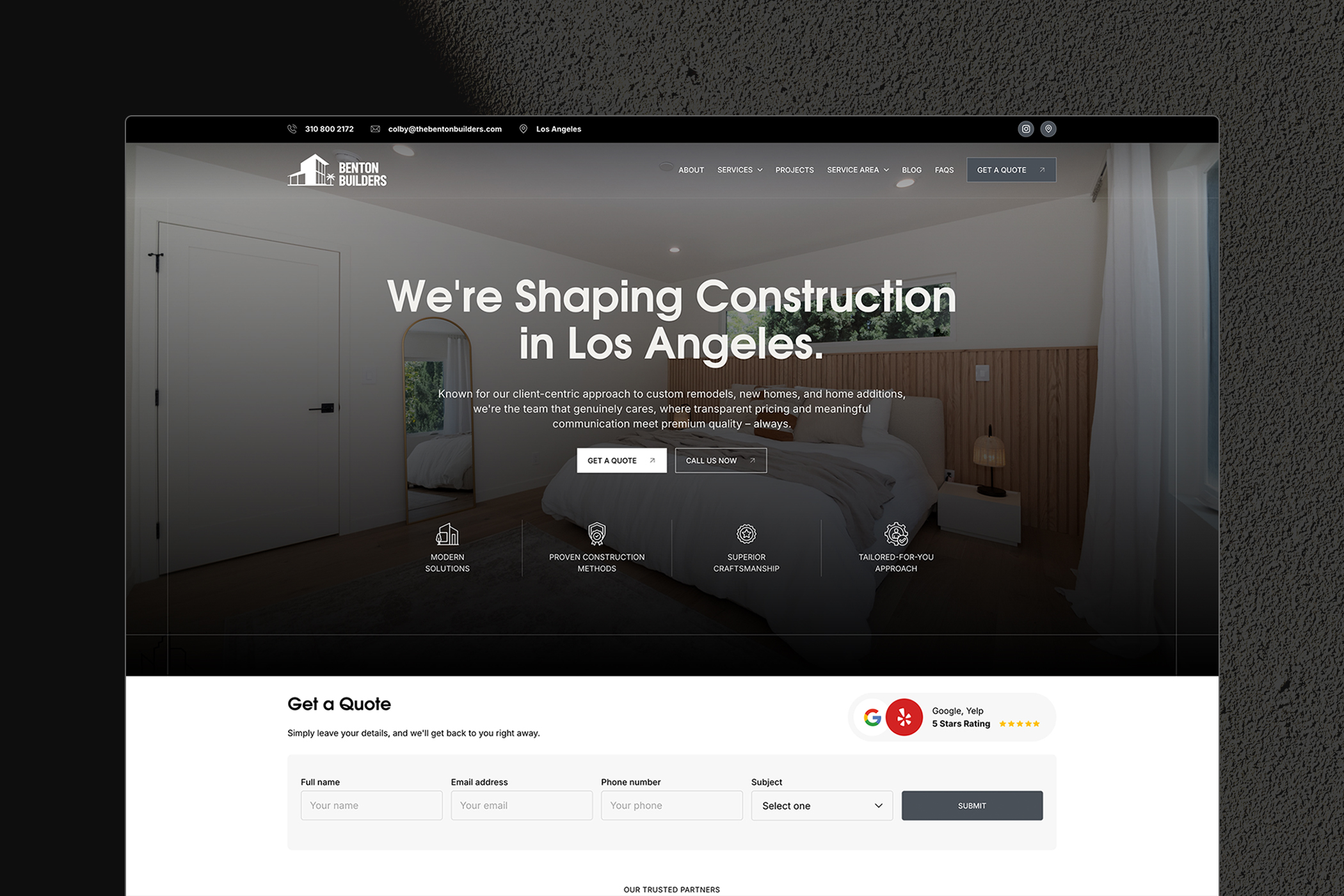
The same approach worked for Benton Builders in LA, Ladybug Defense in Chicago, and One More Rep in London, Ontario — businesses across different industries that all shared the same underlying problem. A digital presence that wasn't working hard enough for them.
Where to Start
If you're not sure whether your website is hurting your business, start by asking yourself these questions. Does your website load quickly on mobile? Does it clearly communicate what you do and who you serve within the first few seconds? Is it showing up on Google for the keywords your clients are searching for? Does it make it easy for visitors to take the next step?
If the answer to any of those is no — or you're not sure — it's worth having a conversation. The fix might be simpler than you think, and the impact can be significant.